Water Chemistry & Scale Prediction (ICP-OES)
Scaling Tendency Test: Predicting Mineral Scale Before It Forms
Landline Phone:
(413) 214-6541
Location:
15 Agawam Ave West Springfield, MA 01089
Mon - Fri:
8.00am - 4.00pm
Sterling Analytical provides advanced scaling tendency testing, combining high-resolution ICP-OES water chemistry analysis with predictive modeling to determine the likelihood of mineral scale formation. In industrial water systems, scale is not just a maintenance issue—it is a critical operational risk that reduces heat transfer efficiency, restricts flow, and leads to costly equipment failure.
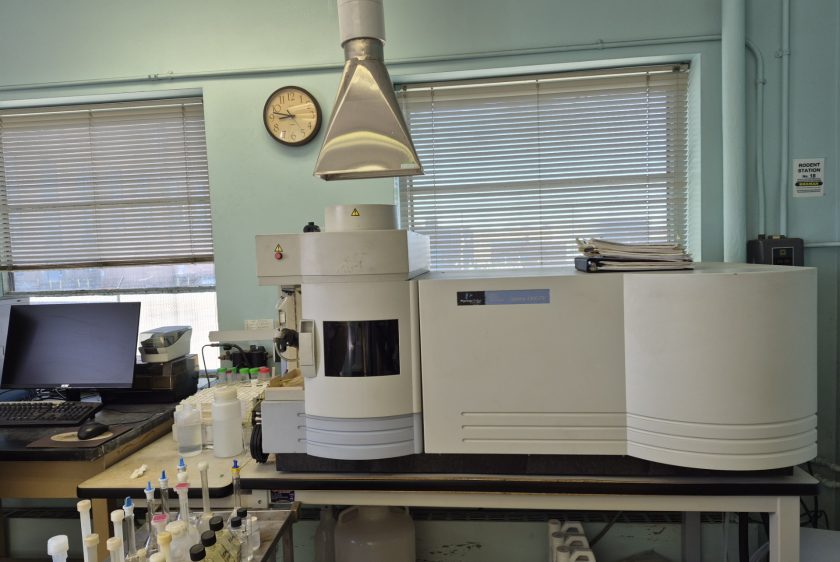
By analyzing the full ionic composition of your water or brine sample, we simulate real-world operating conditions to predict whether minerals such as calcium carbonate, calcium sulfate, barium sulfate, or silica will precipitate. This allows operators to take corrective action before scaling impacts system performance.
If you are searching for a scaling tendency test laboratory near me or need accurate water scaling analysis for cooling towers, boilers, or reverse osmosis (RO) systems, Sterling Analytical delivers actionable data with engineering-level insight.
Scaling Tendency Testing Services (ICP-OES + Simulation)
The Importance of Scaling Tendency Analysis in Water Systems
Scale forms when dissolved minerals exceed their solubility limits and precipitate onto surfaces. This process is driven by changes in temperature, pressure, pH, and concentration.
Operational Efficiency
Scale acts as an insulating layer in heat exchangers and boilers, drastically reducing thermal efficiency and increasing energy consumption.
Asset Protection
Uncontrolled scaling leads to fouling, clogging, and premature failure of pipelines, valves, and membranes.
Chemical Optimization
Accurate scaling predictions allow for precise dosing of antiscalants, reducing chemical costs while maintaining protection
Our Core Analytical Approach (ICP-OES + Modeling)
Sterling Analytical integrates laboratory analysis with predictive simulation to provide a complete scaling profile.
1. ICP-OES Water Chemistry Analysis
We quantify the full elemental composition of your water sample, including:
Calcium (Ca)
Magnesium (Mg)
Sodium (Na)
Potassium (K)
Barium (Ba)
Strontium (Sr)
Iron (Fe)
Silica (Si)
These ions are the primary drivers of scale formation.
Why ICP-OES?
ICP-OES provides: High accuracy across a wide concentration range
Simultaneous multi-element detection
Reliable data for complex brine matrices
Fast turnaround for operational decisions
Anion and Supporting Chemistry
Scaling potential depends on both cations and anions. We incorporate:
Chloride (Cl⁻)
Sulfate (SO₄²⁻)
Bicarbonate (HCO₃⁻)
Carbonate (CO₃²⁻)
Alkalinity and pH
This complete dataset is required for accurate modeling.
Why ICP-OES?
- ICP-OES provides: Reliable detection at regulatory thresholds
- High-throughput analysis for faster turnaround
- Cost-effective testing without sacrificing accuracy
- Proven compliance with EPA Method 6010
3. Scaling Simulation & Saturation Index Modeling
Using the full water chemistry profile, we perform predictive modeling to calculate:
Langelier Saturation Index (LSI)
Stiff & Davis Index (S&DSI)
Ryznar Stability Index (RSI)We also simulate precipitation potential for:
Calcium Carbonate (CaCO₃)
Calcium Sulfate (CaSO₄)
Barium Sulfate (BaSO₄)
Strontium Sulfate (SrSO₄)
Silica (SiO₂)These models predict whether your water is: Undersaturated (no scale risk)
At equilibrium
Supersaturated (scale likely to form)
Common Scaling Mechanisms Identified
Calcium Carbonate Scaling
Triggered by increases in pH and temperature, common in cooling towers and boilers.
Sulfate Scaling (CaSO₄, BaSO₄, SrSO₄)
Highly problematic in high-TDS brines and oilfield waters due to low solubility.
Silica Scaling
Forms hard, glass-like deposits that are extremely difficult to remove, especially in RO systems.
Iron Fouling
Oxidation of dissolved iron leads to particulate deposition and surface fouling.
Industry Applications
Cooling Towers: Control cycles of concentration and prevent scaling on heat exchange surfaces
Boiler Systems: Optimize feedwater chemistry to prevent scale buildup and tube failure
Reverse Osmosis (RO) Systems: Predict membrane scaling potential and optimize antiscalant dosing
Oil & Gas Produced Water: Evaluate scaling risks in high-salinity brines and injection systems
Industrial Water Reuse:
Ensure stability of recycled water streams under changing conditions
Who Needs Scaling Tendency Testing?
Water Treatment Professionals
Facility Engineers (Cooling/Boiler Systems)
RO System Operators
Oil & Gas Operators
Industrial Manufacturing Plants
Environmental Engineers
Why Choose Sterling Analytical
Advanced ICP-OES capability for full water chemistry profiling
Integrated scaling simulation and interpretation
Fast turnaround for operational decision-making
Clear, engineering-focused reporting
Cost-effective alternative to overdesigned chemical programs
Quick Contact
If you have any questions or need help, feel free to contact with our team.
Send Us Email:
Call Us Today: