Landline Phone:
(413) 214-6541
Location:
15 Agawam Ave West Springfield, MA 01089
Mon - Fri:
8.00am - 4.00pm
Sludge Nutrient & Chemical Analysis Services
Related Posts
As the global transition to renewable energy and electric mobility accelerates, the precision of Lithium Brine Testing has become the critical path for the mining and energy sectors. Sterling Analytical provides high-fidelity elemental analysis of lithium-rich brines, serving as the technical gatekeeper between raw geological resources and high-value, battery-grade chemicals.
Within the broader scope of Industrial Water Analysis, lithium brine represents one of the most chemically complex matrices a laboratory can encounter. Unlike standard Feedwater Chemistry Analysis, which focuses on preventing scale in boilers, brine analysis focuses on the selective recovery of a single element from a “soup” of competing ions.
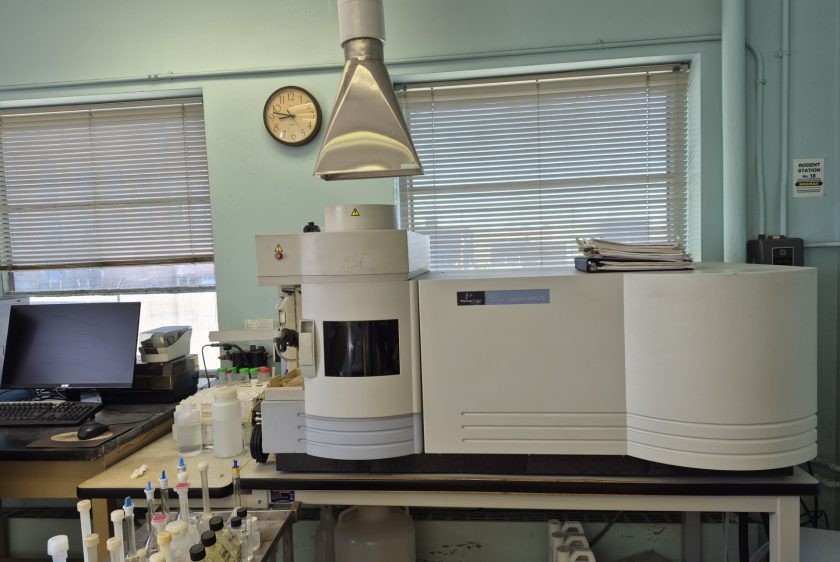
Our laboratory utilizes state-of-the-art ICP-OES and ICP-MS technology, combined with specialized matrix-matching protocols, to provide the data required to design Direct Lithium Extraction (DLE) systems and traditional evaporation pond sequences. Whether you are conducting initial exploration in the “Lithium Triangle” or managing a commercial-scale processing plant, Sterling Analytical delivers the NIST-traceable data required to optimize recovery rates and ensure Battery-Grade (99.5%) purity.
The Economics of Impurities: Why Brine Chemistry Matters
In the lithium industry, the “grade” of the resource is only half the story. The “processability” of the brine is determined by the ratio of lithium to its chemical competitors. Sterling Analytical provides the high-resolution data needed to model these critical economic factors.
1. The Magnesium-to-Lithium (Mg) Ratio
Magnesium is the primary “interference” element in lithium extraction. Because $Mg^{2+}$ and $Li^{+}$ have similar ionic radii, they behave similarly in chemical reactions, making separation difficult.
The Cost of Removal: A high Mg ratio (typically >8:1) requires massive amounts of lime ($Ca(OH)_2$) for precipitation, which increases OPEX and creates vast amounts of waste sludge.
Precision Reporting: Our lab provides the sub-decimal precision in Mg ratios that engineers need to calculate reagent dosing. This is as critical to brine mining as Cooling Tower Water Testing is to HVAC maintenance—precision prevents system failure.
2. Boron and Sulfate Interference
Boron is a notorious “poison” for lithium-ion batteries. Even trace amounts of Boron in the final lithium carbonate product can degrade battery cycle life and safety.
Process Impact: High sulfates ($SO_4$) can lead to the premature precipitation of Calcium Sulfate (gypsum), which scales pipes and fouls expensive DLE resins.
Analytical Solution: We utilize Ion Chromatography (IC) to separate and quantify these anions with absolute certainty, much like we do for Storm Water Testing to identify environmental contaminants.
3. Trace Impurity Profiling for Battery-Grade Purity
To reach the 99.5% “Battery Grade” threshold, the final product must be virtually free of Iron (Fe), Copper (Cu), and Lead (Pb). These elements cause internal short circuits in EV batteries. Sterling Analytical’s trace metal department specializes in detecting these contaminants at the parts-per-billion (ppb) level using Heavy Metals Testing (ICP-OES/MS), ensuring your product meets the stringent specifications of cathode manufacturers.
The Science of High-TDS Brine Analysis
Analyzing lithium brine is significantly more difficult than standard Industrial Water Testing. The primary challenge is the High Total Dissolved Solids (TDS) matrix.
1. Matrix Suppression and Spectral Interference
In a typical brine sample, the Sodium ($Na$) and Chloride ($Cl$) levels can be 100,000 times higher than the Lithium levels. In a standard ICP instrument, this “salt load” can:
Suppress the Signal: The sheer volume of salt atoms “robs” energy from the plasma, making the lithium signal appear weaker than it actually is (false-low).
Spectral Overlap: High concentrations of Iron or Calcium can create “light noise” that overlaps with the lithium emission lines.
Our Solution: Sterling Analytical utilizes High-Solid Nebulizers and Internal Standardization to correct for these matrix effects in real-time, ensuring “true” mass determination.
2. Density-Correction Modeling
In brine mining, lithium is often reported in mg/L (volume), but processing plants operate on a mass-balance basis (mg/kg).
The Importance of Specific Gravity: Because brines are much denser than water, a “mg/L” value can be misleading. We perform high-precision Gravimetric Density Analysis to allow engineers to convert volumetric data into the accurate mass models required for NI 43-101 resource reporting.
3. Silica and Geothermal Brine Challenges
Geothermal brines are often “hot and dirty,” containing high levels of dissolved Silica ($SiO_2$). As the brine cools during the extraction process, the silica precipitates, creating a “glass-like” scale. This is similar to the scaling issues identified in Boiler Water Testing, but at a much higher concentration. We provide specialized silica monomer vs. polymer testing to help operators manage scaling risks in DLE membranes.
Engineering Importance: Supporting Advanced Extraction (DLE)
The industry is moving away from slow evaporation ponds toward Direct Lithium Extraction (DLE). Sterling Analytical is at the forefront of this shift.
DLE Resin Validation: DLE technologies use selective adsorbents to “grab” lithium while letting other salts pass. Our lab provides the “Before and After” (Influent vs. Effluent) chemistry needed to calculate the Adsorption Efficiency and Selectivity Coefficients of your DLE pilot plant.
Reagent Cost Forecasting: By providing an exact count of Calcium and Magnesium ions, we allow plant managers to predict exactly how many tons of Soda Ash or Lime will be consumed per ton of Lithium produced.
Environmental Compliance: Many DLE processes involve reinjecting “spent” brine back into the aquifer. We provide the Storm Water Testing and groundwater monitoring required to ensure that reinjection does not alter the mineral balance of the local environment.
Problems Identified
Mg Ratio Spikes: Identifying high-magnesium “pockets” in a salar that would require different processing strategies.
Silica Scaling Potential: Detecting dissolved silica levels that threaten the lifespan of expensive DLE membranes and heat exchangers.
Potash Byproduct Potential: Identifying high Potassium ($K$) levels that could be harvested as a secondary revenue stream (Potash).
Trace Metal “Poisoning”: Detecting ppb levels of Iron or Aluminum that would disqualify the lithium for use in high-performance EV batteries.
How to Submit a Sample
Sample Volume: 500mL to 1 Liter is standard.
Container: HDPE (High-Density Polyethylene) is mandatory. Glass containers must be avoided as they can leach trace Boron and Silica into the sample.
Preservation: Most brine samples do not require acid preservation if analyzed for total metals, but they must be kept cool (4°C) to prevent the precipitation of salts (like Gypsum) during transit.
Shipping: Brines are highly corrosive and saline. Ensure all lids are taped with electrical tape and samples are double-bagged in heavy-duty plastic to prevent leakage.
Unlock High-Precision Lithium Brine Insights
Sterling Analytical provides advanced elemental analysis of lithium-rich brines, delivering the critical data needed for Direct Lithium Extraction (DLE), evaporation ponds, and battery-grade production. Our NIST-traceable results help mining engineers, plant managers, and environmental specialists optimize recovery rates, reduce reagent costs, and ensure compliance with industry standards.
Take the next step with our expert laboratory services:
Frequently Asked Questions
While we can detect Lithium at the parts-per-billion (ppb) level, most industrial brines range from 50 mg/L to 1,500 mg/L. Our methods are specifically tuned for high-concentration accuracy without sacrificing the ability to see trace impurities.
Yes. Geothermal brines are a specialty of ours. We utilize specialized digestion techniques to ensure that even "complexed" metals and silica are fully in solution before they enter the ICP-OES.
Standard wastewater methods (like EPA 200.7) are designed for low-salt environments. If you run a raw brine through these methods without specialized matrix matching, the high sodium content will cause a "clogged torch" and significantly under-report the lithium concentration.
While the goals are different (extraction vs. protection), both rely on understanding the "Langelier Saturation Index" and the potential for mineral precipitation. Both require precise elemental data to prevent catastrophic equipment failure.
Quick Contact
If you have any questions or need help, feel free to contact with our team.
Send Us Email:
Call Us Today: