Landline Phone:
(413) 214-6541
Location:
15 Agawam Ave West Springfield, MA 01089
Mon - Fri:
8.00am - 4.00pm
Soil Testing for Foundation Construction Services
Related Posts
Sterling Analytical provides specialized soil testing for foundation construction to ensure the structural integrity, safety, and longevity of residential, commercial, and industrial buildings. The soil beneath a structure is the most critical component of the entire engineering design; if the soil fails, the foundation fails, regardless of how much steel or concrete is used. Our laboratory supports civil engineers, architects, and developers with comprehensive geotechnical soil analysis designed to identify the load-bearing characteristics and physical properties of the subsurface.
Through certified ASTM methodologies and advanced geotechnical instrumentation, our foundation soil testing services evaluate parameters such as shear strength, compressibility, and expansive potential. We generate defensible analytical data used to support foundation design (spread footings, mat foundations, or deep pilings), pavement design, and earthwork specifications. If you are searching for a geotechnical soil testing laboratory near me, Sterling Analytical offers the technical precision and rapid turnaround times required to move from the design phase to the “breaking ground” phase with total confidence.
The behavior of soil under the weight of a structure is influenced by its grain size distribution, moisture content, and mineralogical composition. Without structured soil testing for construction, projects are vulnerable to differential settlement, foundation cracking, and catastrophic structural failure. Our laboratory-based foundation analysis programs provide a detailed physical profile of your site, allowing for optimized engineering designs that balance safety with cost-effectiveness.
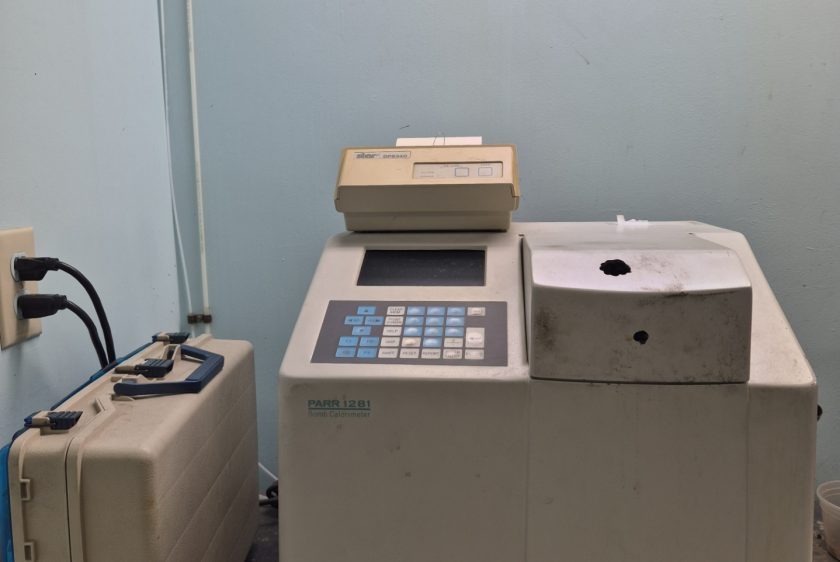
Foundation Soil Testing Capabilities
Sterling Analytical utilizes a rigorous suite of physical and mechanical tests to characterize the soil’s response to structural loads and environmental changes.
Core Geotechnical Testing Package
The core package provides the fundamental data required for standard foundation design and International Building Code (IBC) compliance.
Sieve Analysis (Gradation) – ASTM D422: Determines the distribution of particle sizes within the soil. This is essential for classifying the soil (Sand, Silt, or Clay) and predicting its drainage characteristics and frost susceptibility.
Atterberg Limits (Plasticity) – ASTM D4318: Measures the Liquid Limit (LL) and Plastic Limit (PL) of fine-grained soils. This data is critical for identifying "expansive clays" that shrink and swell with moisture changes, a leading cause of foundation failure.
Moisture-Density Relationship (Proctor Test) – ASTM D698 / D1557: Determines the "Optimum Moisture Content" at which a soil reaches its maximum dry density. This is the gold standard for controlling structural fill and ensuring proper compaction during construction.
In-Place Density Testing: Testing: Verification that the soil on-site has been compacted to the engineering specifications required to support the intended load.
Advanced Mechanical Analysis
For high-rise structures, industrial plants, or sites with “marginal” soil conditions, we provide advanced mechanical testing to model soil behavior under stress.
Direct Shear Test – ASTM D3080: Measures the shear strength of the soil, which is the primary variable in calculating the "Ultimate Bearing Capacity" of a foundation.
Unconfined Compressive Strength – ASTM D2166:Provides a rapid estimate of the cohesive strength of clay soils, essential for slope stability and trench safety analysis..
Consolidation Testing – ASTM D2435: Predicts the magnitude and rate of "settlement" that will occur over time as the weight of the building squeezes water out of the soil pores. This is vital for preventing differential settlement in multi-story buildings.
California Bearing Ratio (CBR) – ASTM D1883: Evaluates the strength of subgrade soil for the design of flexible pavements, parking lots, and heavy equipment pads.
Hydrometer Analysis: Used for fine-grained soils to determine the distribution of silt and clay particles smaller than the #200 sieve.
Why Foundation Testing is Essential
The cost of a comprehensive soil report is a fraction of the total construction budget, yet it provides the highest return on investment in terms of risk reduction.
1. Prevention of Differential Settlement
Differential settlement occurs when one part of a building sinks faster or further than another. This leads to diagonal cracks in masonry, sticking doors, and structural instability. Laboratory consolidation testing allows engineers to predict these movements and design foundations that distribute loads evenly across varying soil strata.
2. Identifying Expansive Soils
Expansive clays are often called “the multi-billion dollar problem” in the construction industry. These soils expand with heavy rain and contract during droughts, exerting thousands of pounds of pressure on foundation walls. Our Atterberg Limit testing identifies these risks early, allowing for mitigation strategies such as soil stabilization (lime/cement) or the use of deep pier foundations.
3. Cost-Effective Waste Disposal
Without accurate soil data, engineers are forced to “over-design” foundations using excessive concrete and steel to account for the unknown. Precise bearing capacity data often allows for shallower, less expensive footings, potentially saving tens of thousands of dollars in material costs.
4. Seismic and Liquefaction Analysis
In seismically active areas, soil testing is required to determine the “Site Class” for earthquake design. We analyze soil density and grain size to evaluate the risk of “liquefaction”—a phenomenon where saturated soil loses its strength and behaves like a liquid during an earthquake.
Compliance Overview
Soil testing for construction is strictly regulated to ensure public safety. Our laboratory procedures comply with the International Building Code (IBC) and AASHTO standards. Furthermore, we provide testing that meets the stringent requirements of the DOT (Department of Transportation) for subgrade preparation, bridge abutments, and reinforced earth structures, ensuring that all data is defensible for municipal and state inspections.
Problems Identified
During routine foundation soil testing, our laboratory frequently identifies:
Low Bearing Capacity: Soil that is too weak to support the intended structural load without modification.
Highly Plastic (Expansive) Clays: Soils that pose a significant risk of seasonal movement and cracking
Organic Silt/Peat Pockets: Highly compressible materials that lead to rapid and severe settlement.
Frost-Susceptible Silts: Materials that will “heave” during winter months, damaging unheated slabs and footings
Excessive Moisture: Soil that cannot be compacted to the required density without significant drying or chemical treatment.
Who Needs Soil Testing for Construction?
Structural Engineers: Requiring precise bearing capacity and settlement data for foundation calculations.
Architects: Ensuring the site is suitable for the proposed building footprint and height.
Residential Developers: Testing for expansive soils before starting large-scale housing subdivisions.
Commercial Contractors: Verifying compaction for parking lots, warehouses, and retail centers.
Municipalities: Ensuring that public infrastructure like schools and libraries are built on stable ground.
Homeowners: Investigating foundation cracks or planning major additions to existing structures.
How to Submit a Construction Soil Sample
Obtain a Boring Log: Samples are typically collected by a drilling rig using “Split-Spoon” (ASTM D1586) or “Shelby Tube” (ASTM D1587) samplers.
Label by Depth: It is critical to label each sample with the specific boring number and the depth (e.g., B-1, 5′-7′) to create a 3D map of the subsurface.
Preserve Moisture: For mechanical tests like Consolidation or Direct Shear, samples must be sealed in wax or airtight tubes to maintain their natural moisture content.
Bulk Samples: For Proctor and Sieve analysis, provide approximately 30-50 lbs of soil in a heavy-duty bucket or bag.
Ship to Our Laboratory: We offer pickup services for large bulk samples or tracked shipping for smaller undisturbed samples.
Schedule Soil Testing for Foundation Construction Today
Structural stability begins below the surface. Without proper soil testing for foundation construction, hidden ground conditions can compromise load-bearing capacity and lead to costly structural issues.
Sterling Analytical delivers comprehensive laboratory-based soil testing to evaluate soil strength, composition, and stability—ensuring safe, reliable foundation design while supporting regulatory compliance.
Frequently Asked Questions
This depends on the building's footprint and local code. Generally, a minimum of 3 to 5 borings is required for a small commercial building to identify soil variations across the site.
The Modified Proctor (ASTM D1557) uses a higher compactive effort and is typically required for heavy-duty applications like airport runways or high-load industrial floors.
Yes. Through "forensic" geotechnical testing, we can take samples from beneath existing slabs to determine why a foundation is failing or settling.
Standard physical tests (Sieve/Atterberg) take 3-5 days. Mechanical tests like Consolidation can take 1-2 weeks due to the slow nature of the soil loading process.
Quick Contact
If you have any questions or need help, feel free to contact with our team.
Send Us Email:
Call Us Today: