Material Compatibility Testing
Moisture & Chemical Exposure Testing: The Science of Synergistic Degradation
Landline Phone:
(413) 214-6541
Location:
15 Agawam Ave West Springfield, MA 01089
Mon - Fri:
8.00am - 4.00pm
Moisture & Chemical Exposure Testing: The Science of Synergistic Degradation
Related Posts
In the controlled environment of a laboratory, materials are often tested against a single variable—a specific acid, a set temperature, or a fixed humidity level. However, in the “real world,” materials face a relentless, simultaneous assault from multiple stressors. A polymer seal in an offshore oil rig is not just exposed to seawater; it is exposed to seawater, high-pressure chemical vapors, and fluctuating thermal cycles.
Moisture & Chemical Exposure Testing is the specialized field of Material Compatibility Testing that evaluates the Synergistic Degradation of materials. This is the phenomenon where the combined effect of moisture and chemicals is significantly more destructive than the sum of their individual parts. At Sterling Analytical, we provide the advanced environmental chambers and analytical precision required to simulate these “perfect storm” conditions, allowing manufacturers to predict service life and prevent catastrophic field failures.
1. The Chemistry of Failure: Why Moisture + Chemicals is Deadly
To understand why moisture and chemical exposure testing is critical, one must understand the chemical mechanisms that occur when these stressors interact.
Hydrolysis: The "Unzipping" of Polymers
Hydrolysis is a chemical reaction in which water molecules break the covalent bonds of a polymer chain. Many high-performance materials—including Polyurethanes (TPU), Polyamides (Nylon), Polyesters (PET), and Polycarbonates—are inherently susceptible to this process.
The Catalyst: Heat and humidity act as the primary catalysts. In a high-humidity environment (85% RH+), water molecules penetrate the polymer matrix.
The Result: The polymer chains are “unzipped,” leading to a dramatic loss in molecular weight. Physically, the material may become brittle and crack, or in some cases, it may undergo “reversion,” turning back into a soft, sticky, or liquid state.
Moisture as a Chemical Carrier (Vapor Transport)
Moisture rarely exists as “pure H2O” in industrial environments. High humidity acts as a solvent and carrier for corrosive gases such as Sulfur Dioxide ($SO_2$), Nitrogen Oxides ($NO_x$), and Chlorides ($Cl^-$).
Acid Rain Simulation: When moisture condenses on a surface in the presence of these gases, it forms a localized, highly concentrated acidic or alkaline film. This “Micro-Environment” can trigger rapid corrosion or polymer etching that would not occur in dry chemical exposure alone.
Plasticization and Swelling
When a material absorbs moisture and chemicals simultaneously, it undergoes “Plasticization.” The absorbed molecules wedge themselves between polymer chains, increasing the “Free Volume” of the material.
The Consequence: This leads to significant dimensional swelling, a decrease in the Glass Transition Temperature ($T_g$), and a loss of mechanical stiffness. For a precision-engineered gasket or seal, a 5% change in dimension due to swelling can lead to a total system failure.
2. Critical Failure Modes Identified in the Lab
Sterling Analytical’s exposure protocols are designed to “force” these failure modes in a controlled environment so they can be analyzed before a product reaches the market.
Environmental Stress Cracking (ESC)
As detailed in our ASTM D543 guide, ESC is a leading cause of plastic failure. However, moisture often acts as the “initiator.” By softening the surface of the plastic, moisture allows chemical reagents to penetrate deeper into the material’s “crazes” (micro-cracks), leading to sudden, brittle failure under mechanical load.
Delamination of Coatings and Composites
In multi-layer materials, moisture and chemicals often attack the Interface—the bond between the coating and the substrate.
Hygroscopic Stress: As the coating absorbs moisture, it expands. If the substrate (like metal) does not expand at the same rate, the resulting “Shear Stress” causes the coating to blister, peel, or delaminate.
Cathodic Delamination: In coated metals, moisture and electrolytes can trigger an electrochemical reaction at the interface, physically “pushing” the coating off the metal surface.
Dendritic Growth and CAF (Electronics)
For electronic assemblies, moisture and chemical residues (like flux activators) are a fatal combination.
Dendritic Growth: In the presence of moisture and an electrical bias, metal ions “migrate” across the surface of a PCB, growing microscopic, tree-like structures (dendrites) that cause intermittent shorts and total board failure.
Conductive Anodic Filament (CAF): This is the internal version of dendritic growth, where copper filaments grow inside the fiberglass layers of the PCB, leading to catastrophic internal shorts.
3. Testing Methodologies: Simulating the Service Life
Sterling Analytical utilizes several standardized and custom-designed protocols to evaluate moisture and chemical resistance.
Cyclic Humidity and Temperature (ASTM D2247 / MIL-STD-810)
Rather than a “Steady State” test, we cycle the environment. By fluctuating the temperature and humidity, we simulate the “Dew Point” effect.
The “Breathing” Effect: As the temperature drops, moisture condenses into liquid form on the material surface and is “pulled” into pores and cracks. As the temperature rises, the moisture evaporates, often leaving behind concentrated chemical residues. This cycle is far more aggressive than constant exposure.
Chemical Vapor Exposure (Outgassing Simulation)
In many applications, the material is not “dipped” in a chemical but is exposed to its vapors. We utilize specialized “Vapor Chambers” to test how materials react to:
Fuel and Oil Vapors: Critical for automotive and aerospace components.
Sterilization Vapors: Testing medical devices against Hydrogen Peroxide ($H_2O_2$) or Ethylene Oxide (EtO) vapors.
Industrial Pollutants: Simulating exposure to $H_2S$ (Hydrogen Sulfide) in oil and gas environments.
Accelerated Aging (The 85/85 Test)
To simulate years of field use in a matter of weeks, we utilize the Arrhenius Equation model. A common industry benchmark is the 85/85 Test—exposing the material to 85°C and 85% Relative Humidity.
The Logic: For many chemical degradation reactions, the rate of reaction doubles for every 10°C increase in temperature. 1,000 hours of 85/85 testing can often simulate 5 to 10 years of “Normal” environmental exposure.
4. Evaluation Metrics: How We Measure "Failure"
A Sterling Analytical report provides quantitative data across four primary dimensions:
- Mechanical Property Retention: We perform pre- and post-exposure tensile, flexural, and impact testing. We measure the “Percentage Retention” of strength. (e.g., “The material retained 88% of its original tensile strength after 500 hours of exposure.”)
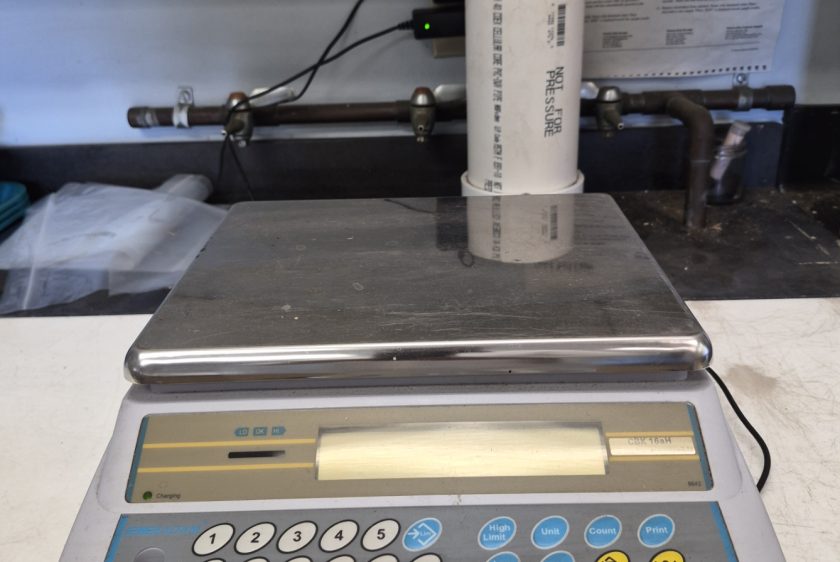
- Dimensional and Mass Stability: Using high-precision analytical balances and digital micrometers, we track weight gain (absorption) and swelling.
- Electrical Integrity: For insulators and electronics, we measure Insulation Resistance (IR) and Dielectric Breakdown Voltage. Moisture absorption often causes a “leakage current” that renders an insulator useless.
- Analytical Chemistry : We analyze the “Condensate” or “Leachate” to see if the moisture has pulled specific additives, plasticizers, or metal ions out of the material.
5. Industry-Specific Applications
Aerospace and Defense
Materials in aircraft must withstand extreme humidity at sea level and “Bone Dry” conditions at 35,000 feet, all while being exposed to hydraulic fluids (Skydrol) and de-icing chemicals. Our testing ensures that composite airframes and interior plastics do not undergo “Environmental Embrittlement.”
Medical Device Manufacturing
Surgical instruments and implants are subjected to repeated “Steam + Chemical” cycles in an autoclave. We validate that the polymers used in these devices do not hydrolyze or leach harmful chemicals into the patient over time.
Automotive Engineering
“Under-the-hood” components are the ultimate test of moisture and chemical compatibility. We test sensors, connectors, and hoses against the synergistic effects of road salt, humidity, engine coolants, and high-temperature oils.
Renewable Energy (Solar & Wind)
Solar backsheets and wind turbine blades are exposed to decades of UV, humidity, and “Salt Fog.” We perform accelerated aging to ensure these multi-million dollar assets reach their 25-year design life without delamination.
Submission Guidelines & Protocol Design
Because every environment is unique, Sterling Analytical works with you to define a Custom Exposure Profile:
The Stressors: Provide the specific chemicals (liquids or vapors) and the target humidity levels.
The Cycle: Define the “Dwell Time” (e.g., 12 hours at 95% RH, 12 hours at 50% RH).
Sample Geometry: We prefer standardized “Coupons” (ASTM D638 dog-bones) for mechanical testing, but we can also test finished assemblies (up to 24″ x 24″ x 24″).
Documentation: A Safety Data Sheet (SDS) is required for all chemical reagents.
Uncover the Impact of Moisture & Chemical Exposure
Sterling Analytical provides advanced testing for moisture and chemical exposure, delivering the critical data needed to evaluate material durability, synergistic degradation, and long-term performance under harsh environmental conditions.
Our NIST-traceable results help engineers, manufacturers, and environmental specialists identify failure risks, improve material selection, and ensure compliance with industry standards and safety requirements.
Take the next step with our expert laboratory services:
Frequently Asked Questions
"Waterproof" usually refers to a barrier that prevents liquid water from passing through. "Moisture Resistance" refers to the material's ability to maintain its physical and chemical properties when water molecules (vapor) are absorbed into its structure.
We create a "Synthetic Acid Rain" solution based on regional environmental data (typically a mix of Sulfuric and Nitric acids) and use it in a cyclic humidity chamber to simulate the drying and concentrating effect of real-world weather.
Yes. We can capture the vapors released by a material during high-heat/high-humidity exposure and analyze them via Gas Chromatography-Mass Spectrometry (GC-MS) to identify potentially harmful or corrosive byproducts.
This is a common and critical observation in material science. In a liquid immersion test, water molecules are "clumped" together, and surface tension can often prevent the liquid from entering microscopic pores or "crazes" in a plastic surface. However, in a humidity chamber, the water exists as a vapor—individual, high-energy molecules that act like a gas. These vapor molecules can infiltrate a polymer matrix or a coating interface much more aggressively than liquid water. Furthermore, humidity cycles involve constant evaporation, which concentrates any chemical residues (like salts or acids) on the surface, making them far more corrosive than a diluted liquid bath.
While we can perform short-term "screening" tests of 168 hours (7 days), the industry standard for "Accelerated Life Testing" (ALT) is typically 1,000 hours (approximately 6 weeks). This duration, when combined with elevated temperatures (like 85°C), is generally accepted as a simulation of 5 to 10 years of real-world environmental exposure.
Yes. We offer "Active Load" testing where we can route power cables into the environmental chamber. This allows us to monitor for leakage currents or intermittent shorts that only occur when the device is under electrical bias in a high-humidity, chemically active environment.
Quick Contact
If you have any questions or need help, feel free to contact with our team.
Send Us Email:
Call Us Today: