Landline Phone:
(413) 214-6541
Location:
15 Agawam Ave West Springfield, MA 01089
Mon - Fri:
8.00am - 4.00pm
Transformer Oil Sample Analysis: The Guardian of the Power Grid
In the hierarchy of industrial equipment, the power transformer is perhaps the most critical. Whether it is a small pole-mounted unit or a massive 500 MVA generator step-up transformer, these machines are the silent heart of the electrical infrastructure. Unlike an engine or a hydraulic pump, a transformer has no moving parts. Instead, it relies on a specialized “insulating fluid” (transformer oil) to perform two vital functions:
Electrical Insulation: Preventing high-voltage arcs between the internal windings and the grounded tank.
Thermal Cooling: Carrying heat away from the core and windings to the external radiators.
Transformer Oil Sample Analysis is a highly specialized branch of our Oil Analysis Laboratory. While standard UOA (Used Oil Analysis) focuses on wear and friction, transformer analysis focuses on Dielectric Integrity and Dissolved Gas Analysis (DGA). Because a transformer failure often results in a catastrophic fire or a multi-day power outage, regular oil testing is the only way to ensure the reliability of your electrical assets.
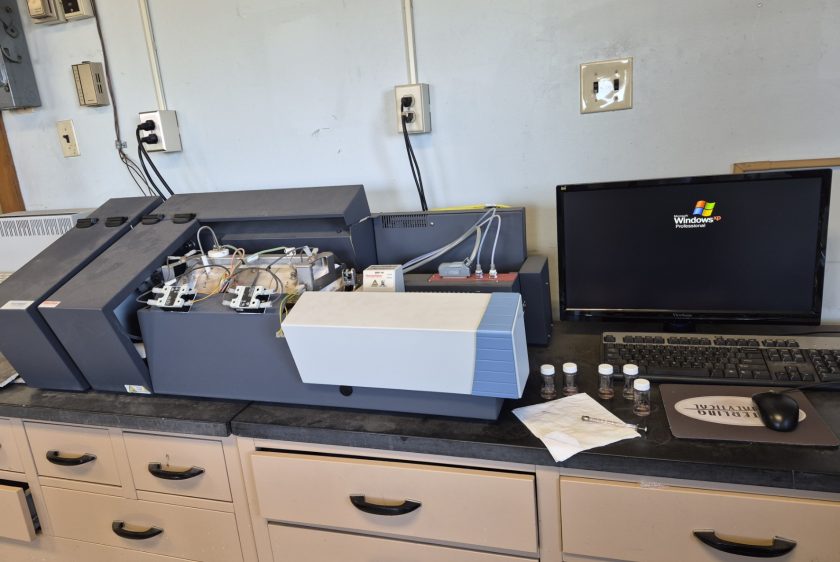
1. Dielectric Strength (Breakdown Voltage) - ASTM D877 / D1816
The most fundamental property of transformer oil is its ability to resist electrical stress. Dielectric Strength is a measure of the voltage at which the oil “breaks down” and allows an electrical arc to pass through it.
At Sterling Analytical, we utilize two primary ASTM methods for dielectric testing:
ASTM D877: Uses flat-disk electrodes. This is the traditional test for “new” oil or oil in older equipment.
ASTM D1816: Uses VDE (Verband Deutscher Elektrotechniker) spherical electrodes and a built-in stirrer. This is a much more sensitive test and is the modern standard for high-voltage transformers (above 230kV).
What the Results Mean: A low dielectric strength indicates that the oil is contaminated—usually by moisture or conductive particles (like carbon or metallic dust). If the breakdown voltage falls below the IEEE or IEC limits, the transformer is at immediate risk of an internal “flashover,” which can destroy the unit in milliseconds.
2. Moisture Analysis: The Enemy of Insulation (ASTM D6304)
Water is the single greatest threat to a transformer’s longevity. Moisture enters the system through “breathing” (atmospheric humidity) or through the chemical breakdown of the internal paper insulation (cellulose).
The Dielectric Drop: As moisture levels rise, the dielectric strength of the oil drops exponentially.
Paper Degradation: While the oil can be “dried” using a vacuum dehydrator, the moisture that migrates into the paper insulation causes permanent, irreversible damage. This “rots” the paper, leading to mechanical failure of the windings.
Sterling Analytical uses Karl Fischer Titration to measure water in parts-per-million (ppm). Because the “safe” level of water depends on the temperature and the age of the transformer, we provide a Percent Saturation calculation to give you a true picture of the risk.
3. Dissolved Gas Analysis (DGA): The "X-Ray" of the Transformer
If Dielectric Strength is the “blood pressure” of the transformer, DGA is the “X-ray.” This is the most powerful diagnostic tool in the Oil Analysis Laboratory.
When a fault occurs inside a transformer—such as an arc, a hot spot, or a partial discharge—the high energy “cracks” the oil molecules into specific gases. By measuring the concentration and ratios of these gases, we can identify the exact nature of the problem without opening the tank.
The Key "Fault Gases":
Hydrogen ($H_2$): Indicates “Corona” or partial discharge (low-energy electrical stress).
Methane ($CH_4$) & Ethane ($C_2H_6$): Indicate low-to-medium temperature thermal faults (overheating oil).
Ethylene ($C_2H_4$): Indicates high-temperature thermal faults (severely hot connections or core bolts).
Acetylene ($C_2H_2$): The “Red Flag” gas. Acetylene only forms during high-energy Arcing. Even a small amount (e.g., 5-10 ppm) is a critical emergency.
Carbon Monoxide ($CO$) & Carbon Dioxide ($CO_2$): Indicate the overheating or “charring” of the paper insulation.
By using Duval’s Triangle and the Rogers Ratio Method, Sterling Analytical’s experts can tell you if your transformer has a loose connection, a failing pump motor, or a major internal short circuit.
4. Interfacial Tension (IFT) and Acidity (TAN)
As transformer oil ages, it oxidizes and forms polar contaminants and organic acids.
Total Acid Number (TAN): Measures the concentration of acidic byproducts. High acidity leads to the corrosion of the tank and the accelerated “rotting” of the paper insulation.
Interfacial Tension (IFT): Measures the “surface tension” between the oil and a layer of water. New oil has a high IFT. As the oil degrades and forms “sludge precursors,” the IFT drops.
The “Sludge” Warning: When the TAN is high and the IFT is low, the oil is on the verge of “sludging.” Sludge is a heavy, sticky residue that coats the windings and plugs the cooling radiators, leading to rapid overheating and failure.
5. Furanic Analysis: Measuring the "Remaining Life" of the Paper
While the oil in a transformer can be reclaimed, filtered, or replaced, the solid insulation (cellulose paper) cannot. Once the paper insulation that wraps the copper windings degrades to the point of mechanical failure, the transformer is effectively at the end of its life.
2-Furfural and DP (Degree of Polymerization)
As the paper insulation breaks down due to heat and moisture, it releases specific chemical compounds called Furans into the oil. At Sterling Analytical, we use High-Performance Liquid Chromatography (HPLC) to measure these compounds, specifically 2-Furfural.
Degree of Polymerization (DP): New paper has a DP value of approximately 1,000 to 1,200. As the paper “rots,” the DP value drops. When the DP reaches 200, the paper has lost all mechanical strength and will crumble like a dry leaf—leading to a catastrophic internal short circuit.
The Calculation: By measuring the concentration of Furans in the oil, our laboratory can mathematically estimate the current DP value of the paper without ever opening the transformer. This allows asset managers to plan for multi-million dollar replacements years in advance.
6. Power Factor (Dissipation Factor) - ASTM D924
The Power Factor test is a measure of the “dielectric loss” in the oil. In a perfect insulator, the current and voltage are 90 degrees out of phase. However, as oil becomes contaminated with water, carbon, or oxidation byproducts, it becomes slightly conductive.
The Leakage: A high power factor indicates that “leakage current” is passing through the oil and being dissipated as heat.
The Limit: For new oil, the power factor at $25^\circ C$ should be less than 0.05%. In service, a power factor exceeding 0.5% to 1.0% is a major red flag, indicating that the oil is severely contaminated or oxidized and is no longer a reliable insulator.
7. Corrosive Sulfur (ASTM D1275)
In recent years, the industry has seen an increase in transformer failures caused by Corrosive Sulfur. Certain sulfur compounds in the oil can react with the copper windings to form Copper Sulfide ($Cu_2S$).
This conductive copper sulfide can migrate from the windings into the paper insulation, creating a conductive path that eventually leads to a “flashover.” Our laboratory performs the ASTM D1275 test by heating a copper strip in the oil and inspecting it for the distinctive “tarnish” or “scaling” that indicates corrosive sulfur activity. If detected, we recommend the addition of a Metal Deactivator (Passivator) to protect the copper.
8. Sampling Safety and Precision: The Glass Syringe
Sampling transformer oil is fundamentally different from sampling an engine or a gearbox. Because Dissolved Gas Analysis (DGA) is so sensitive, the sample must never come into contact with the outside air.
1. The Gas-Tight Syringe: For DGA, we provide specialized 30ml or 50ml glass syringes with three-way stopcocks. This ensures that the gases dissolved in the oil (like Hydrogen or Acetylene) do not “escape” into the atmosphere before they reach the laboratory.
2. The Flushing Protocol: Transformer sampling valves are often exposed to the elements for years. You must flush at least 2 to 4 liters of oil through the valve to clear out stagnant oil, moisture, and debris before taking the laboratory sample.
3. Safety First: Always ensure the transformer tank is under positive pressure before opening a sampling valve. If the tank is under a vacuum, opening the valve will “suck” air (and moisture) into the transformer, potentially causing an immediate internal fault.
9. The ROI of Transformer Oil Analysis
The cost of a comprehensive transformer oil test (including DGA and Furans) is a tiny fraction—often less than 0.1%—of the cost of a transformer failure.
Life Extension through "Oil Processing"
If our laboratory detects high moisture or low dielectric strength, the transformer doesn’t necessarily need to be replaced. We can recommend Oil Processing (Vacuum Dehydration and Degassing). By removing the water and gases, you can stop the degradation of the paper insulation and add 10 to 20 years to the life of the asset.
Emergency Prevention
A transformer fire or explosion is not just a financial loss; it is a major safety and environmental hazard. DGA is the only way to detect a “silent” fault like a loose connection or a failing tap changer before it leads to a catastrophic event.
Integrated Oil Analysis Suite
Transformer health is the final piece of a total facility reliability program. Explore our other specialized laboratory services:
UOA (Used Oil Analysis): The foundational test for all industrial lubricants.
Hydraulic Oil Analysis: Critical for the high-pressure systems used in manufacturing and heavy equipment.
Engine & Motor Oil Analysis: Specialized testing for the backup generators and prime movers that support your electrical grid.
Frequently Asked Questions
For critical substation transformers, we recommend annual testing. For smaller industrial units, every 2 to 3 years is standard. If a DGA report shows "Cautionary" levels of gas, the sampling frequency should be increased to monthly or quarterly to monitor the "Rate of Change."
Acetylene is only produced by high-energy arcing (temperatures above $700^\circ C$). If it is found in the main tank, it is a critical emergency. If it is found in a Load Tap Changer (LTC), it may be normal, as LTCs are designed to arc during switching.
Yes. Sterling Analytical provides specialized testing for Natural Esters (Fr3) and Synthetic Esters. These fluids have different "normal" ranges for moisture and acidity compared to traditional mineral oil.
Dark oil usually indicates high levels of Oxidation or Carbonization. While color is not a definitive test, a rapid change from light yellow to dark brown is a strong indicator that the oil is "sludging" and needs immediate attention.
Quick Contact
If you have any questions or need help, feel free to contact with our team.
Send Us Email:
Call Us Today: