Environmental Testing Services
Landline Phone:
(413) 214-6541
Location:
15 Agawam Ave West Springfield, MA 01089
Mon - Fri:
8.00am - 4.00pm
Heavy Metals Testing (ICP-OES) Services
Related Posts
In modern environmental engineering and industrial operations, heavy metals analysis is not just a laboratory function—it is a critical decision-making tool that influences compliance, safety, and long-term environmental impact. Unlike organic contaminants such as hydrocarbons or solvents that may degrade over time, heavy metals are elemental. They do not break down, volatilize, or biodegrade into harmless compounds. Instead, they persist indefinitely, accumulating in soils, groundwater systems, sediments, and biological organisms.
This persistence makes heavy metals uniquely dangerous. Once released into the environment, they can migrate slowly but continuously, often going undetected until they reach concentrations that pose serious risks to human health or ecological systems. Lead contamination in drinking water systems, arsenic in groundwater aquifers, and chromium in industrial discharge are all examples where delayed detection resulted in significant regulatory and public health consequences.
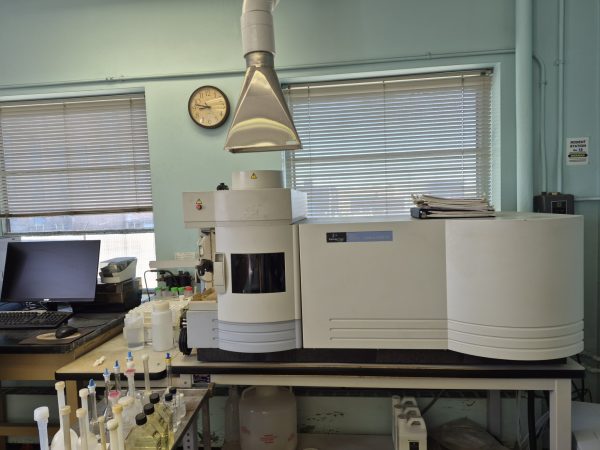
Sterling Analytical provides high-precision heavy metals testing using ICP-OES (Inductively Coupled Plasma Optical Emission Spectroscopy), one of the most widely accepted analytical techniques for multi-element detection. Our laboratory is equipped to handle a broad spectrum of sample matrices—from ultra-clean drinking water to highly complex materials such as industrial sludge, landfill leachate, mining tailings, and hazardous waste.
1. The Science of ICP-OES: How We Measure Elements at the Atomic Level
ICP-OES is fundamentally different from most analytical techniques. Instead of measuring chemical reactions or absorbance, it measures atomic emissions—the light emitted by elements when they are energized under extreme conditions.
The Plasma Torch: The Heart of the System
At the core of the ICP-OES instrument is an argon plasma torch operating at temperatures between 8,000 and 10,000 Kelvin. This is not simply “hot”—it is an environment capable of breaking down virtually any chemical compound into its elemental components.
When a sample enters this plasma, a sequence of rapid transformations occurs:
- The liquid is converted into a fine aerosol (nebulization)
- The solvent evaporates instantly (desolvation)
- Remaining solids are vaporized into gas
- Chemical bonds are destroyed (atomization)
- Atoms absorb energy and become excited
This entire process happens in milliseconds.
Spectral Emission: The Fingerprint of Elements
Each element has a unique electron configuration. When excited, electrons move to higher energy states and then return to their ground state, releasing energy as light.
This emitted light occurs at specific wavelengths unique to each element, such as:
- Copper → ~324.7 nm
- Lead → ~220.3 nm
- Zinc → ~213.9 nm
The ICP-OES spectrometer separates this light using a diffraction grating and measures its intensity using a CCD detector.
The intensity of emitted light is directly proportional to concentration.
Why ICP-OES is Preferred
Compared to older methods like Flame Atomic Absorption:
- It measures multiple elements simultaneously
- It has a wide linear dynamic range
- It handles complex matrices better
- It provides high throughput and repeatability
2. Regulatory Frameworks: The Backbone of Metals Testing
Heavy metals testing is driven by strict regulatory requirements designed to prevent environmental contamination and protect public health.
EPA Method 200.7 (Water and Wastewater)
This method governs analysis of metals in water systems under:
- Clean Water Act (CWA)
- Safe Drinking Water Act (SDWA)
It is used to determine compliance with:
- NPDES discharge permits
- Drinking water limits
- EPA Method 6010D (Solids and Waste)
For solid matrices such as:
- Soil
- Sludge
- Industrial waste
This method accounts for:
- High solids content
- Matrix interference
- Complex chemical composition
- The Critical Role of Acid Digestion
Before ICP-OES analysis, samples must undergo acid digestion to extract metals from the matrix.
This process involves:
- Nitric acid (oxidation of organic matter)
- Hydrochloric acid (metal stabilization)
- Hydrogen peroxide (complete oxidation)
For difficult matrices, microwave digestion (EPA 3051A) is used.
Without proper digestion:
- Metals remain trapped in solids
- Results are falsely low
- Regulatory compliance becomes unreliable
3. The RCRA 8 Metals: A Detailed Breakdown
Under RCRA, eight metals define hazardous waste classification.
Arsenic (As)
Common in pesticides and groundwater systems. Long-term exposure causes cancer and organ damage.
Cadmium (Cd)
Used in batteries and electroplating. Highly mobile in soil and extremely toxic to kidneys.
Chromium (Cr)
Exists in two forms:
- Cr³⁺ (less harmful)
- Cr⁶⁺ (highly toxic and carcinogenic)
ICP-OES measures total chromium.
Lead (Pb)
A neurotoxin affecting brain development, especially in children. Often found in legacy infrastructure.
Mercury (Hg)
Unique for its volatility. Requires careful handling and sometimes alternative detection methods.
Other Metals (Ba, Se, Ag)
Important for:
- Industrial waste classification
- Aquatic toxicity
4. Managing Interference: Where Expertise Matters
ICP-OES is powerful—but not foolproof.
Spectral Interference
In high-metal samples:
- One element’s emission overlaps another
Example:
- Iron interfering with cadmium
Solution:
- Inter-element correction (IEC)
- Physical Interference
High salt samples:
- Affect aerosol formation
- Distort signal
Solution:
- Internal standards (Yttrium, Scandium)
- Matrix Effects
Complex samples:
- Suppress or enhance signals
Solution:
- Matrix matching
- Dilution
- Advanced calibration
5. Industrial Applications: Beyond Compliance
Heavy metals testing is not just regulatory—it’s operational.
Corrosion Monitoring
Iron or copper in water indicates:
pipe degradation
Wastewater Treatment
Metals impact:
- Biological processes
- Chemical dosing efficiency
- Manufacturing Quality Control
Trace metals can:
- Contaminate products
- Cause failures in electronics or coatings
- Mining and Resource Recovery
ICP-OES is used to:
- Evaluate ore quality
- Monitor tailings
6. Quality Control and Data Defensibility
Every sample batch includes:
- Method blanks
- Laboratory control samples
- Matrix spikes
- Calibration verification
All standards are:
- NIST traceable
Problems Identified
- Lead contamination in redevelopment sites
- Arsenic in groundwater
- Chromium discharge violations
- Metal buildup in sludge
- Who Needs Heavy Metals Testing?
- Environmental consultants
- Municipal utilities
- Industrial facilities
- Mining companies
How to Submit a Sample
- Liquids: 500 mL–1L
- Solids: 100–250g
- Preserve to pH < 2
- Store at 4°C
Schedule Heavy Metals Testing (ICP-OES) Today
Accurate detection of trace elements is essential for environmental and material safety. Without proper heavy metals testing, harmful contaminants can go undetected—leading to health risks, regulatory non-compliance, and long-term environmental damage.
Sterling Analytical provides advanced laboratory-based ICP-OES testing to identify and quantify heavy metals with high precision, supporting environmental monitoring, quality control, and regulatory compliance programs.
Frequently Asked Questions
Metals in environmental samples are rarely present as free ions. They are often bound within soil particles, organic matter, or industrial residues. Without digestion, these metals remain physically trapped and are not measured. Acid digestion breaks down the sample matrix and releases all “environmentally available” metals into solution, ensuring accurate and complete results.
Total metals include all metals present in a sample, both dissolved and attached to suspended particles. Dissolved metals are measured after filtration and represent only the fraction that is truly in solution. This distinction is critical for regulatory reporting because some permits specify limits for dissolved metals, while others require total metals.
Field kits typically rely on colorimetric or simplified methods that are prone to interference from turbidity, color, or other dissolved substances. ICP-OES, on the other hand, measures elemental emissions directly and is far more accurate and reliable for regulatory purposes.
Yes. In heterogeneous samples like sludge or soil, metals are not evenly distributed. Proper sample homogenization and representative sampling are critical to obtaining accurate results.
Quick Contact
If you have any questions or need help, feel free to contact with our team.
Send Us Email:
Call Us Today: