Landline Phone:
(413) 214-6541
Location:
15 Agawam Ave West Springfield, MA 01089
Mon - Fri:
8.00am - 4.00pm

Diesel Fuel Testing For Storage Tanks Services
Related Posts
Sterling Analytical provides professional diesel fuel testing for storage tanks to evaluate fuel condition, detect contamination, and monitor long‑term storage stability. Facilities that maintain aboveground storage tanks (ASTs), underground storage tanks (USTs), bulk fuel depots, and onsite diesel reserves rely on laboratory analysis to verify fuel integrity and protect infrastructure investments. Our laboratory delivers ASTM-certified testing programs specifically designed for stored diesel fuel in dedicated storage systems.
Over time, diesel fuel stored in tanks is vulnerable to oxidation, water accumulation, microbial growth, sediment formation, and chemical instability. Without routine diesel fuel testing for storage tanks, contamination can compromise fuel usability, damage transfer systems, and create regulatory concerns. Our comprehensive testing programs provide defensible analytical data that supports preventive maintenance, fuel polishing decisions, tank cleaning schedules, and long-term fuel management strategies.
Unlike field screening kits, laboratory-based diesel fuel testing for storage tanks uses standardized ASTM methodologies and precision instrumentation to accurately quantify contamination levels and identify degradation trends. This approach allows storage operators to make data-driven decisions before fuel quality declines to unacceptable levels.
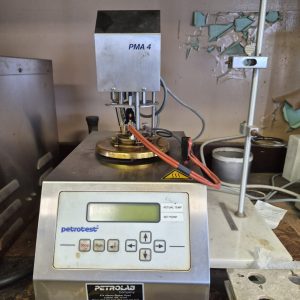
Diesel Fuel Testing for Storage Tanks Capabilities
Sterling Analytical offers both a Basic Diesel Fuel Testing for Storage Tanks Package and advanced analytical services to fully characterize stored fuel condition.
Basic Diesel Fuel Testing for Storage Tanks Package
This core test package determines whether stored diesel has been exposed to harmful contaminants or instability mechanisms common in long-term tank storage.
Clear and Bright – ASTM D4176: Visual inspection evaluates fuel clarity and identifies haze, free water, or suspended solids. Changes in appearance often signal storage-related instability.
Water and Sediment – ASTM D2709: This centrifuge method quantifies free water and suspended sediment. Water intrusion is one of the most common issues identified during diesel fuel testing for storage tanks and frequently results from condensation, tank leaks, or poor venting.
Water by Karl Fischer – ASTM D6304: Karl Fischer titration measures dissolved moisture not visible during visual inspection. Even low levels of dissolved water can promote microbial growth and accelerate internal tank corrosion.
Flash Point – ASTM D93: Flash point analysis verifies fuel safety characteristics and identifies potential cross-contamination with volatile hydrocarbons.
Microbial Growth – ASTM D6469: Microbial screening detects bacteria and fungi that thrive at the fuel-water interface in storage tanks. Microbial contamination produces sludge and acidic byproducts that degrade fuel quality and damage tank systems.
Particulate Contamination – ASTM D2276: This gravimetric filtration method measures insoluble particulate matter that can accumulate in tank bottoms and transfer systems.
Advanced Diesel Fuel Testing for Storage Tanks
When expanded evaluation is necessary, advanced testing further characterizes stored fuel stability and regulatory parameters.
Distillation – ASTM D86: Determines boiling range characteristics and identifies compositional changes due to contamination or aging.
API Gravity – ASTM D1298: Measures density for inventory reconciliation and fuel condition assessment.
Copper Strip Corrosion – ASTM D130:Evaluates corrosive tendencies that may impact metallic tank components and transfer systems.
Sulfur – ASTM D5453: Quantifies sulfur content for environmental and emissions compliance.
Cetane Index – ASTM D4737: Provides calculated ignition quality data for stored diesel intended for future use.
Ash Content – ASTM D482: Determines inorganic residue that may indicate contamination or degradation.
Viscosity – ASTM D445: Measures fuel flow characteristics, which may shift during long-term storage.
Carbon Residue – ASTM D524: Evaluates deposit-forming tendencies under thermal stress.
Together, these analyses create a comprehensive diesel fuel testing for storage tanks program that monitors contamination, degradation, and specification compliance throughout the storage lifecycle.
Storage Tank Compliance & Risk Management
Storage tank operators must comply with environmental and safety regulations governing fuel systems. Routine diesel fuel testing for storage tanks supports:
- Preventive maintenance documentation
- Tank integrity monitoring
- Environmental compliance programs
- Insurance reporting requirements
- Fuel polishing decision-making
- Long-term storage stability management
Laboratory documentation provides defensible records demonstrating proactive fuel management and due diligence.
Common Problems Identified in Storage Tanks
During diesel fuel testing for storage tanks, our laboratory frequently identifies:
- Water accumulation from condensation
- Microbial growth at the tank bottom
- Sludge and sediment buildup
- Oxidative fuel degradation
- Acid formation from microbial activity
- Density shifts due to contamination
- Particulate accumulation
These issues develop gradually and often remain undetected without structured testing programs. Early detection reduces cleanup costs and prevents widespread tank contamination.
Who Needs Diesel Fuel Testing for Storage Tanks?
Diesel fuel testing for storage tanks is essential for organizations that maintain bulk diesel inventory for operational, emergency, or resale purposes.
- Fuel Storage & Distribution Companies
Bulk fuel operators require routine diesel fuel testing for storage tanks to monitor inventory quality and prevent large-scale contamination events.
- Industrial & Manufacturing Facilities
Facilities storing diesel for equipment or fleet fueling rely on testing to protect machinery and maintain fuel usability.
- Commercial Property Portfolios
Large properties maintaining onsite diesel reserves benefit from long-term storage monitoring programs.
- Agricultural Operations
Farms storing seasonal diesel supplies use testing to prevent degradation between operational cycles.
- Municipal & Government Facilities
Municipal storage yards and public works departments depend on consistent fuel quality for fleet readiness.
How to Submit a Storage Tank Sample
Getting started with diesel fuel testing for storage tanks is straightforward:
- Download the Chain of Custody Form
- Collect a representative bottom and mid-level tank sample
- Follow packaging and labeling instructions
- Ship to our laboratory
- Receive detailed laboratory analysis and recommendations
Our technical team provides sampling guidance to ensure accurate representation of stored fuel condition.
Diesel Fuel Testing for Storage Tanks Near You
If you are searching for:
- Diesel fuel testing for storage tanks near me
- Storage tank fuel analysis laboratory
- Diesel tank contamination testing
- Bulk fuel quality testing services
Sterling Analytical delivers fast turnaround times, ASTM-certified methods, and comprehensive reporting to support facilities nationwide.
Schedule Diesel Fuel Testing for Storage Tanks Today
Stored diesel fuel represents both a financial asset and an operational risk. Without routine diesel fuel testing for storage tanks, contamination and degradation may compromise usability and increase maintenance costs.
Sterling Analytical provides professional laboratory-based diesel fuel testing for storage tanks to monitor fuel quality, detect contamination early, and protect long-term storage investments.
Protect your stored diesel inventory with expert diesel fuel testing for storage tanks backed by certified laboratory analysis.
Frequently Asked Questions
We recommend using a "Bacon Bomb" or a weighted sampler to collect a "bottom sample." This ensures we are testing the area where contaminants are most likely to hide.
For most bulk storage applications, we recommend testing twice per year—once in the spring and once in the fall—to account for seasonal condensation cycles.
Yes. If you catch water and microbial growth early through testing, you can treat the tank with biocides and additives, often avoiding the high cost of a full tank pump-out and manual cleaning.
They are microscopic organisms that live in the water at the bottom of diesel tanks. They feed on the fuel and produce a thick, slimy waste that clogs filters and corrodes metal.

Quick Contact
If you have any questions or need help, feel free to contact with our team.
Send Us Email:
Call Us Today: